
The Institution as an Object of Design with Kip Lee
Design is many things. It’s the fonts on this page, it’s the device you’re reading these words on, it’s the flow of how you interact with this website, it’s the structure of the company that created it and the reasons we did so. These are the four orders of design—a framework coined by design thinker and professor Richard Buchanan to describe the evolution of design’s purview over the last century.
The first order: Graphic
The second order: Industrial
The third order: Interaction
The fourth order: Systems
It is this fourth order that the field of design is currently exploring. It’s the environments and systems that all the other orders of design happen within. Businesses, governments, hospital systems, and more. All these systems are created and shaped by design, whether intentionally or unintentionally. And according to Buchanan:
“Some designers have the ability to deal with these very complex questions that lie at the core of our social life. Not every designer, but some have the ability to grasp the ideas and the values at the core of very complicated systems. Those are fourth order designers.”
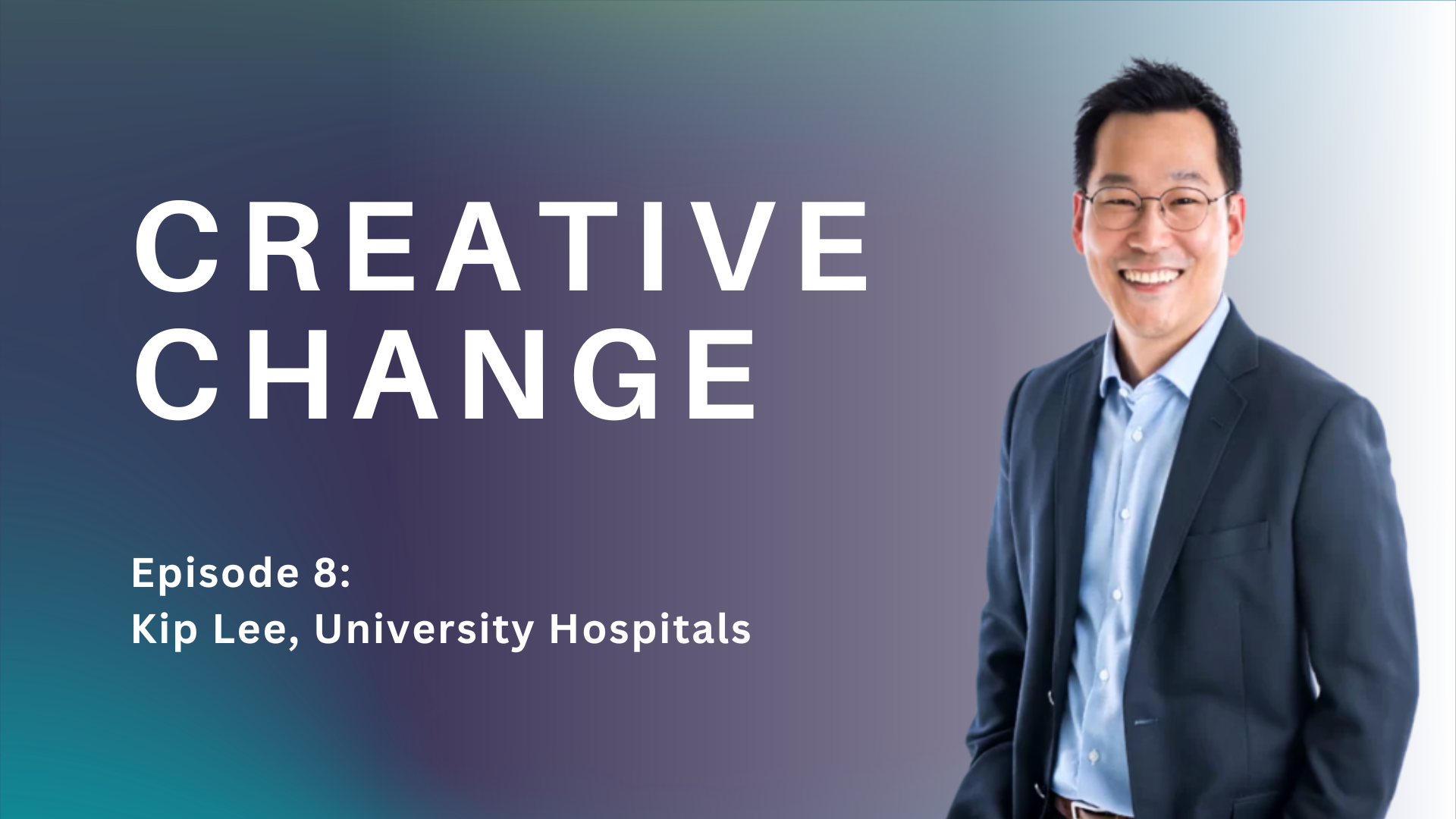
On this episode of Creative Change, we sat down with one of those designers to learn about the next leap in fourth order design. Our guest is Kip Lee, President of UH Ventures at University Hospitals Cleveland Medical Center.
In a recently published paper in She Ji: The Journal of Design, Economics, and Innovation, Kip argues that fourth order design is a frequently misunderstood area of design, and that modern fourth order designers require another clarifying concept: the institution. As an object of design, institutions are complex, human-shaped forms that make up the structures of everyday life. And understanding the institution as a concept can bring fourth order design out of the theoretical and into the concrete world.
In this wide-ranging conversation, we discuss how the concept of fourth order design informs Kip’s work as an innovation leader within such a large and complex hospital system, and how he uses this understanding to empower non-designers within the organization to drive lasting transformation in the systems around them.