
How do you brand a city?
Branding a city might be one of the most complex branding challenges there is.
Unlike a company, a city doesn’t have a single CEO, a unified customer base, or a clearly defined product. Instead, it has hundreds of thousands—or even millions—of stakeholders, each with their own perspectives, priorities, and lived experiences. Some have deep roots stretching back generations. Others arrived last week. Some are responsible for governing the city. Others have spent decades shaping its culture without ever holding formal authority.
And yet, somehow, a city brand is supposed to represent all of them.
That’s what makes city branding both fascinating and difficult. It requires creating a shared identity that can unite people who may not agree on what that identity actually is. It has to honor a city’s history while promoting its future. It needs to attract investment, talent, tourism, and growth without alienating the people who already call the city home.
Perhaps most challenging of all, it’s often unclear who has the authority to define a city’s brand in the first place.
The people who are technically in charge—mayors, economic development leaders, tourism organizations—often don’t have the longest sight lines into the city’s history and culture. Political administrations and executive leadership change. Meanwhile, the people who have lived in a city the longest and understand its nuances may have little formal authority. External organizations may bring valuable perspective and expertise but lack the legitimacy to make decisions on behalf of residents.
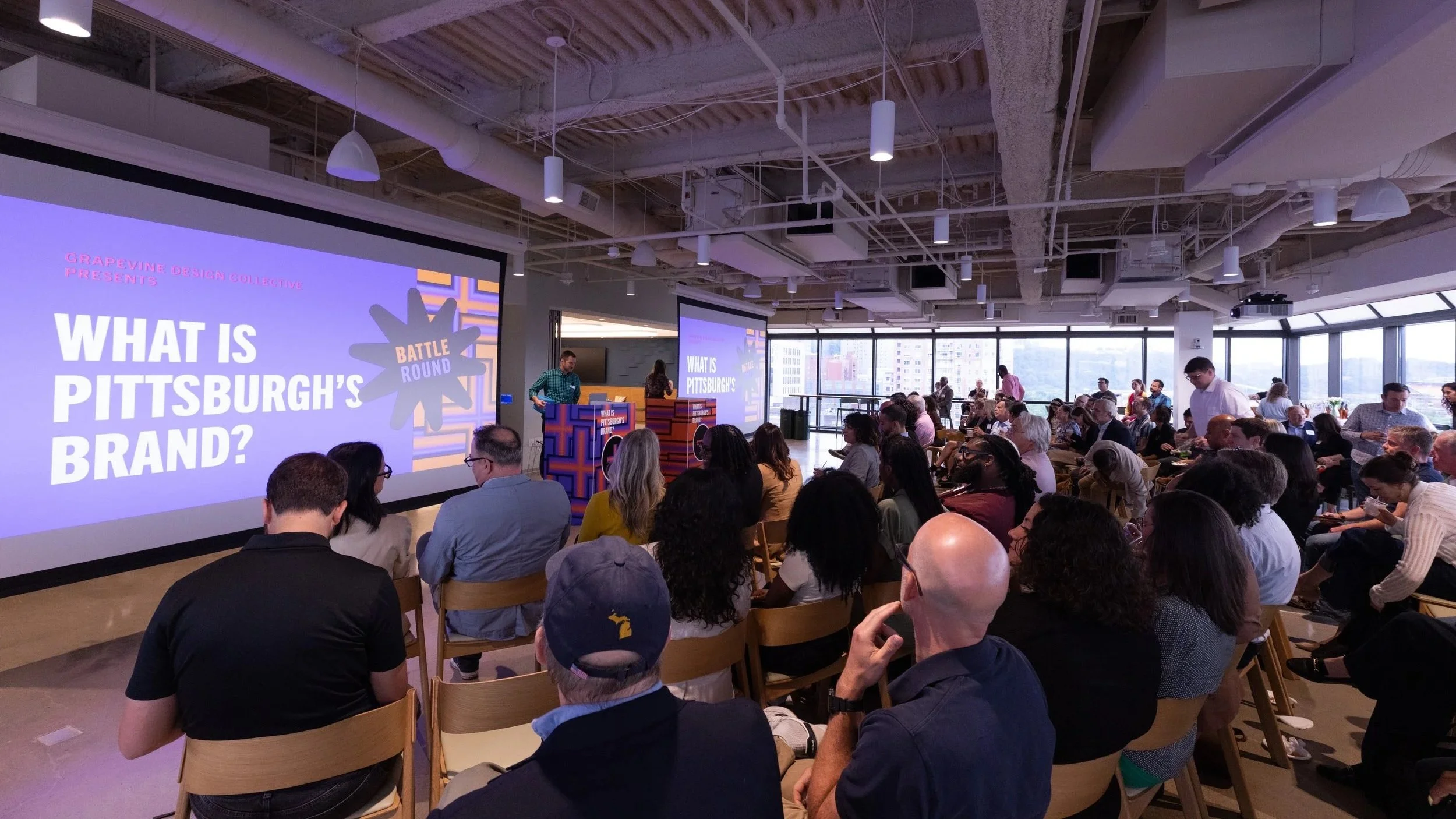
Throughout our 45 years in business, we’ve helped countless organizations brand new companies, initiatives, and products. But we’ve never branded a city. Now, with the help of our fellow design colleagues in the Grapevine Collective—and with participation from the Pittsburgh Foundation—we’ve set out to do just that. To define the brand of Pittsburgh for the city’s yesterday, today, and tomorrow.
The result is a unique branding problem that only collaboration, humility, and design thinking can tackle.
How do you create a city brand people can believe in?
The first step is accepting an uncomfortable truth: you are never going to make everyone happy. Cities are simply too diverse for universal agreement. The goal of city branding should not be consensus. It should be authenticity.
A successful city brand represents where a city is going while remaining rooted in where it came from. It captures the present while helping residents envision a shared future.
History matters. Heritage matters. But nostalgia alone cannot define a city’s future.
The challenge is finding the balance.
Putting Pittsburgh’s brand up for debate
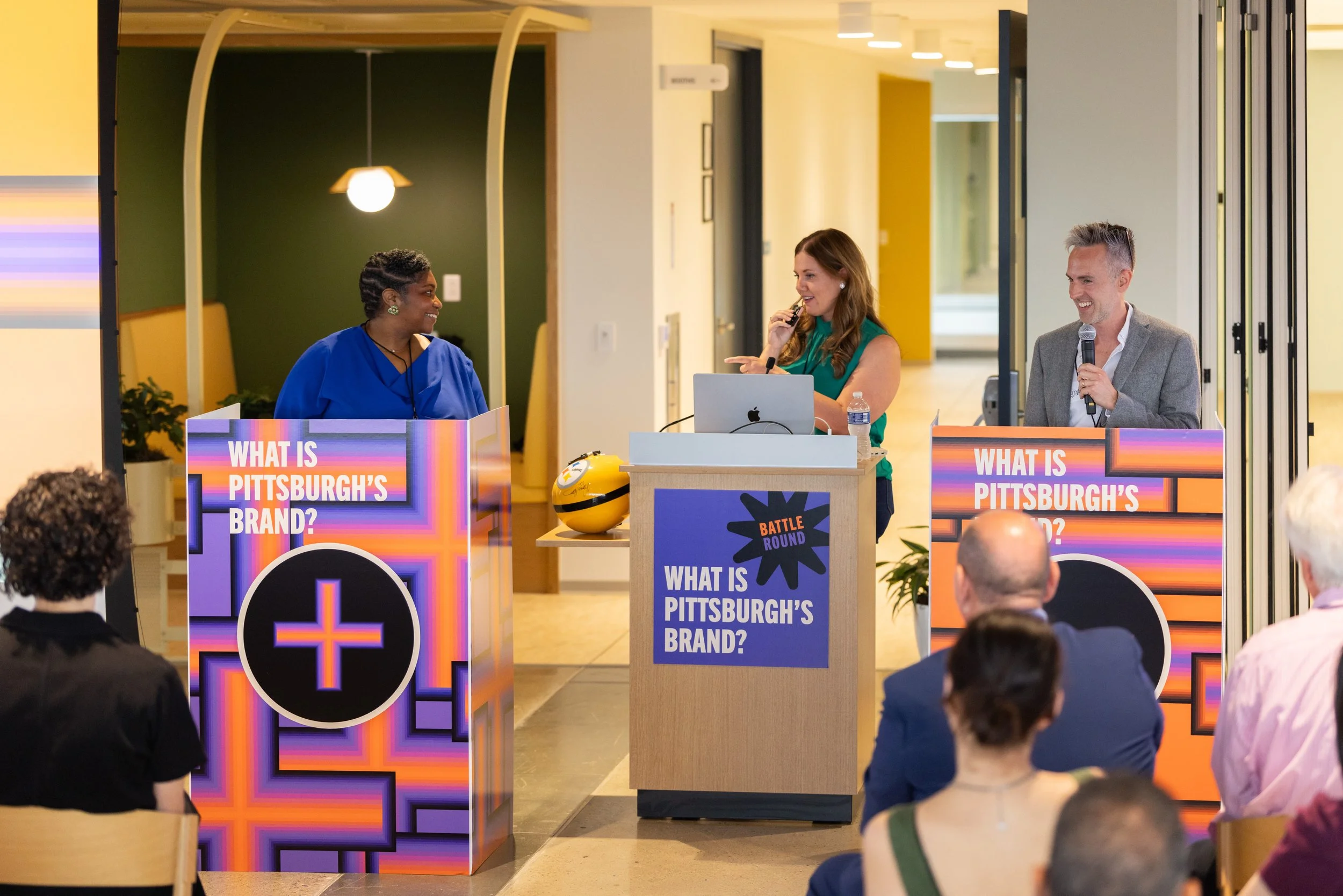
As part of our ongoing event series with The Grapevine Design Collective, we set out to explore this challenge. We invited a diverse group of Pittsburgh leaders—including public servants, media personalities, business leaders, and community advocates—to debate different aspects of Pittsburgh’s identity.
Questions were pulled from a hat. Two speakers were selected at random. One was tasked with arguing in favor of a statement. The other had to argue against it.
Participants were given the themes ahead of time, but they didn't know the order they would appear or which side they would be asked to defend.
Themes included:
Mobility: Is Pittsburgh an accessible city where mobility creates opportunity and inclusion?
Resilience: Is Pittsburgh truly a comeback city powered by the resilience of its people?
Design: Does Pittsburgh believe good design improves everyday life and creates systems that are easy to navigate?
Quality of Life: Is a high quality of life achievable for everyone in the city?
Welcoming: Is Pittsburgh genuinely welcoming to newcomers?
It was a conversation that surfaced both pride and tension. Because when people genuinely care about a place, they see both its strengths and its shortcomings.
What did we learn?
One of the clearest lessons from the event was that Pittsburgh has no shortage of potential brand pillars:
It could emphasize its world-class medical and educational institutions.
It could focus on its ninety distinct neighborhoods.
It could lean into its industrial heritage.
It could highlight its growing technology sector.
The challenge is choosing what aspects of that identity deserve emphasis.
Several recurring themes emerged:
Pittsburgh's quality-of-life is improving, but uneven
Participants pointed to the region's medical and educational institutions as defining strengths. These organizations improve quality of life every day—extending lifespans, advancing research, creating opportunity, and serving communities across the region.
Yet participants also noted a growing tension. Quality of life improvements are not being experienced equally across all communities. For some residents, life is getting significantly better. For others, progress feels far more limited.
Pittsburgh's connectedness is a strength and a weakness
Many participants described Pittsburgh as a place where everyone knows everyone. That can be incredibly welcoming for people with existing roots in the city. But for newcomers, that same dynamic can feel exclusionary. A city brand built around friendliness must account for both experiences.
Some of Pittsburgh's best stories remain untold
The conversation also highlighted important dimensions of Pittsburgh's identity that often receive less attention: its rich African American history, its affordability relative to peer cities, its world-class symphony orchestra, its blue-collar culture.
These are meaningful aspects of the city's character, yet they often sit outside dominant narratives about healthcare, education, technology, or steel.
Debate is just the beginning
Of course, one event cannot define a city brand. It can only contribute to the process. Like any branding effort, a comprehensive city brand development follows four stages: Discovery, Development, Testing, and Rollout.
Discovery: Every authentic brand begins with listening and learning. Using deep research to understand the history and culture of the city, and gathering perspectives from across the stakeholder landscape. This means engaging a representative cross-section of residents—not just the people who are already interested in branding conversations. Events like these are valuable inputs, but they are only one piece of a much larger research and listening effort.
Development: Once insights have been collected, they can be translated into brand concepts. Begin by developing visual mood boards of the city’s neighborhoods, architecture, and other aspects unique to the city to gain inspiration before developing any brand concepts. And remember—a brand is much more than a logo. It includes messaging, personality, tone of voice, visual identity, and more. At this stage, it’s important to stay flexible. Develop rough sketches. Test ideas early. Continuously return to stakeholders to ensure emerging concepts reflect what was learned during discovery.
Testing: Before a city brand launches, it needs to be stress-tested. Testing helps identify blind spots, unintended interpretations, and potential points of resistance. This is especially important because every city already has an existing brand, whether formally defined or not. Testing ensures that residents don't feel like essential parts of their identity are being erased in pursuit of something new. And the only way to do this is to test the brand with a representative cross section of the city’s residents. Don’t leave anyone out.
Rollout: Finally, a city brand must be implemented thoughtfully. People should encounter it consistently across websites, advertising, wayfinding systems, signage, public communications, and economic development efforts. But consistency alone isn't enough. The rollout must also feel inclusive. Residents need opportunities to engage with the brand, understand it, and ultimately make it their own. Perhaps most importantly, leaders should clearly explain why the brand was developed the way it was and how it connects back to what was learned during the listening process.
For our effort, the next step is clear. The Grapevine Collective will continue the discovery process by gathering perspectives from the cohort most connected to the city’s future: the next generation. We will convene a panel of high school and college students to understand their perspectives on the city they call home and where they hope to see it move in the future.
Building a shared future
One comment from the event captured the spirit of the evening perfectly:
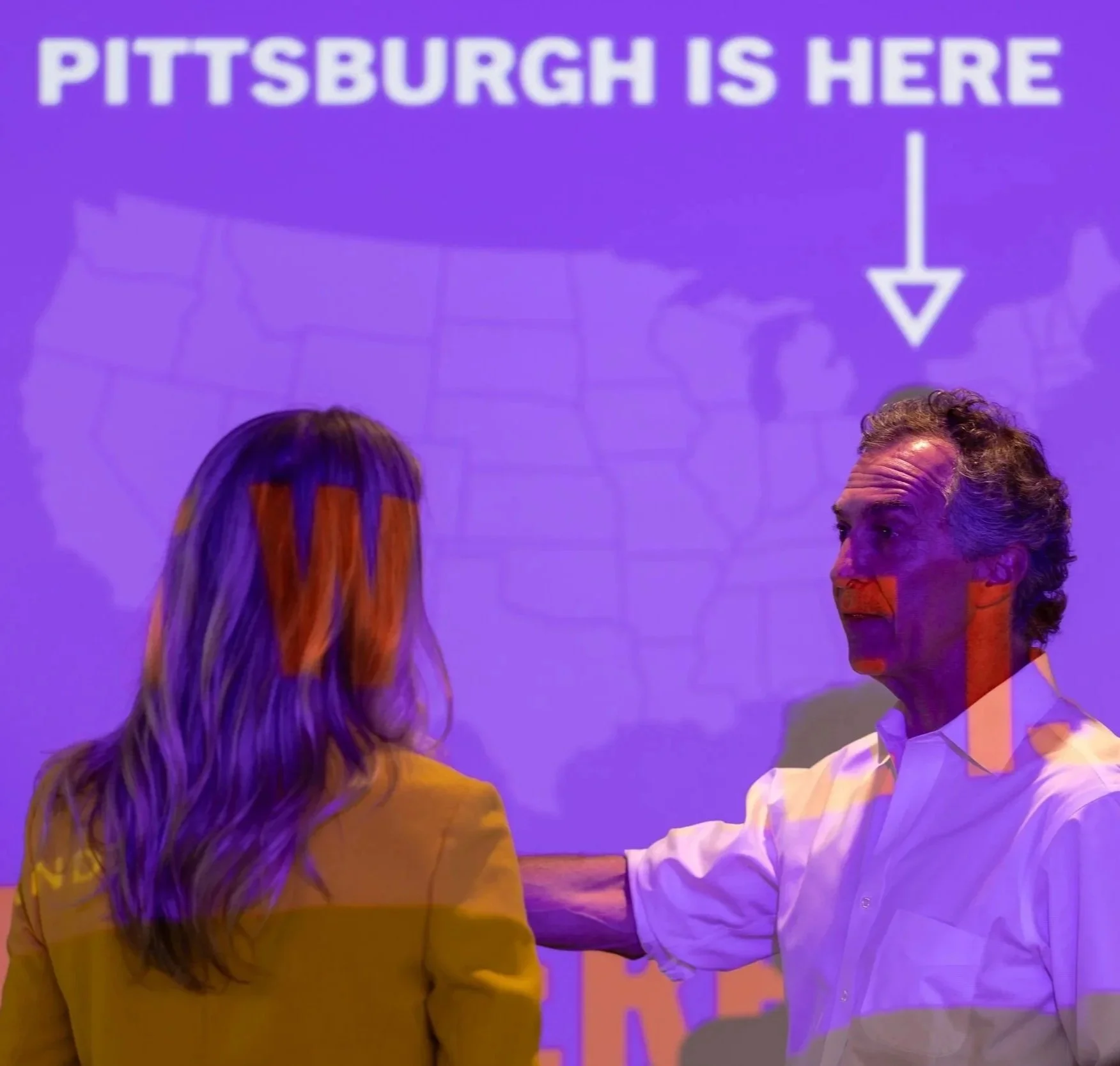
"What we knew was that it would be fun, but what we didn't expect was to see the way in which a different sector—not the nonprofit sector, not the philanthropic sector—but the creative and vibrant sector could step into civic engagement."
That's ultimately what city branding should accomplish. It should create a shared conversation.
A city brand is at its strongest when it helps people understand where they came from, where they are today, and where they want to go together.
Our debate didn't answer every question about Pittsburgh's identity. It wasn't supposed to. What it did accomplish was bringing Pittsburghers together to begin imagining a brand that captures the city's past, present, and future.
And that's where every authentic city brand begins.
To watch the full video of the event, check out the Grapevine Design Collective YouTube page.
And if you’re ready to learn how our nearly half-century of branding expertise can make your next brand sing, drop us a line. We’d love to chat.