
Anthem
Is visual thinking and communication the key to quickly changing an organization?
Organizational design can be a tricky undertaking for any company, especially one as large as Anthem, Inc. During an organizational design process, it’s crucial that the team and all of the people they touch—including leaders and internal partners—have a clear understanding of the process, roles, and goals to ensure they stay focused. Being able to tell the team’s story in a way that is clear and concise drove both efficiency and effectiveness.
To help the organizational design team codify their thinking, create internal alignment, and communicate efficiently and effectively with partners, ThoughtForm facilitated the team to discuss their design principles, approach, and big ideas. We then translated their vision and process into an easy to understand, single-page Foglifter® and a deep-dive playbook that was shared with the Anthem executive team, internal partners, managers, and other leaders.
Who did we help?
Anthem, Inc. is working to transform health care with trusted and caring solutions. Their health plan companies deliver quality products and services that give their members access to the care they need. With over 74 million people served by its affiliated companies, including nearly 40 million within its family of health plans, Anthem is one of the nation’s leading health benefits companies.
What did we do?
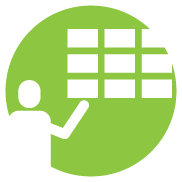
Created a visual to arrive at a solution everyone could agree on.
By illustrating the process, the organizational design team was able to think it through from beginning to end, and create a shared focal point for discussion.
The visual process helped the team to spot differences in vocabulary and arrive at a common language. It also inspired the team to envision the path forward along with all of the possible outcomes.
This dialogue uncovered differences in team members’ views of the process, and gaps in the story being told. It also helped align the team on a shared vision of goals, outputs, and roles.

Armed the team with the tools to get full-hearted approval from leadership.
The Foglifter® that ThoughtForm and Anthem co-created helped the team present to Anthem’s leadership to establish the premise of the project quickly. With less time spent explaining, the team was able to spend more time in meaningful discussion.
The visualization brought clarity without oversimplifying the message, and made the approach and outcomes tangible. Using visual communication also differentiated the organizational design team’s efforts from other current initiatives and helped to achieve executive attention.

Rapidly engaged internal partners to implement the process.
Using the Foglifter®, the organizational design team was able to orient other teams quickly. The plan was then unpacked further in the Playbook. With both tools in use, participants could more easily envision and understand their roles within the overall effort.
As the team dove into the work, the playbook kept everyone focused on the process, while speeding the onboarding of new team members. A clear and tangible understanding of the process empowered internal partner teams to participate fully and co-create the outcomes they wanted.
What did we create?
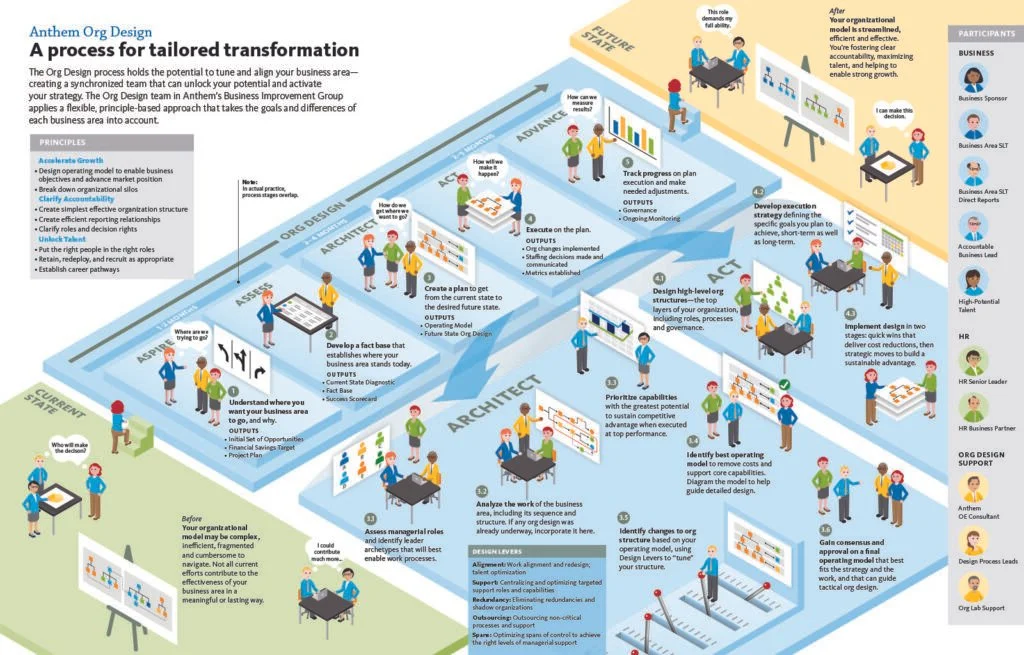
Organizational Design Foglifter®
The Organizational Design Foglifter® gave a high-level, clear, and concise view of the overall scope, approach, and plan for the organizational design team, the Anthem executive team, internal partners, managers, and other leaders.
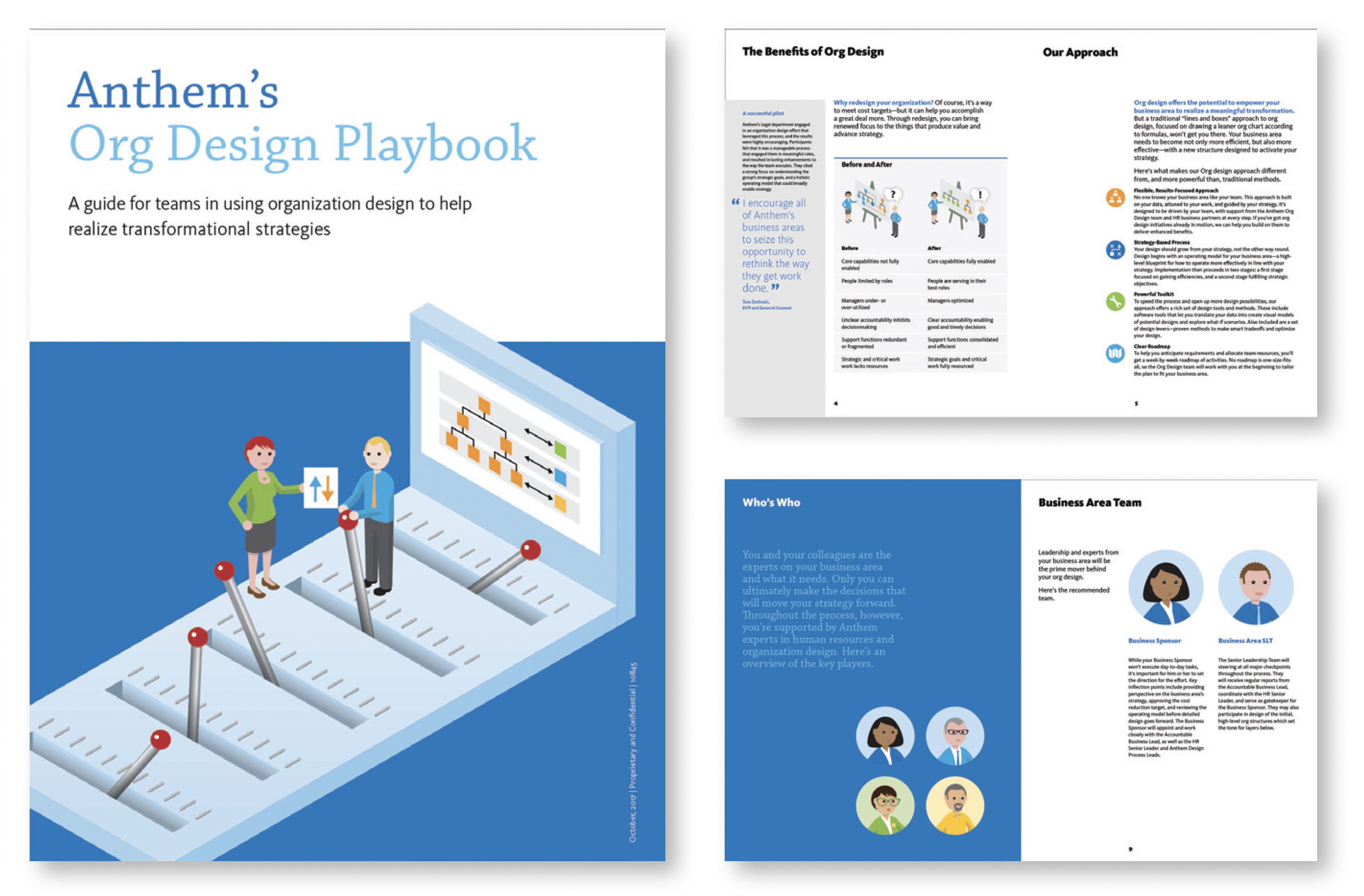
Product Template Integration
Based on our research and recommendations for production software, ThoughtForm developed a detailed set of custom product templates that implemented the design and supported the automatic flow of prices.
The Results
Through the course of this collaborative, organizational design process, Thoughtform:
Built internal alignment and an agreed-upon roadmap of the organizational design process
Accelerated leadership’s understanding of process and value for quick approval
Sped the recruitment and engagement of internal partners who needed to participate in and support the organizational design process without reservation